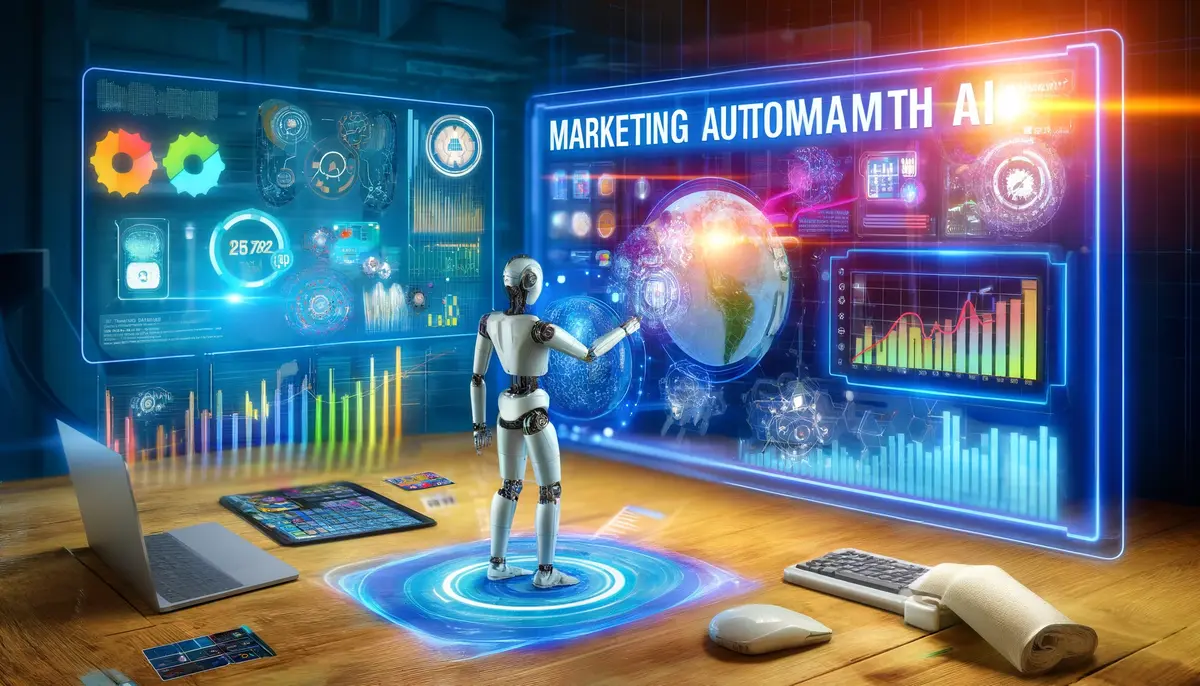
Artificial intelligence (AI) is transforming the way businesses attract, engage, and convert customers. With smarter algorithms, predictive analytics, and automated workflows, AI in marketing automation is no longer the future — it’s the new standard.
In this guide, we’ll explore how AI is reshaping marketing automation in 2025, what tools are leading the change, and how small businesses can leverage AI to grow faster with less effort.
Table of Contents
What Is AI in Marketing Automation?
AI in marketing automation refers to the use of artificial intelligence to optimize and personalize marketing campaigns automatically.
Traditional automation tools rely on pre-set rules — send an email after signup, or post on social media every Monday. AI goes further by analyzing behavior, predicting outcomes, and adjusting in real time.
Examples include:
- Email platforms that choose the best send time for each user
- CRMs that score leads based on purchase intent
- Chatbots that personalize conversations dynamically
How AI Enhances Email Marketing
Email remains a top-performing channel, and AI is making it more powerful than ever.
Modern tools like Brevo, ActiveCampaign, and MailerLite now use AI to:
- Predict when users are most likely to open emails
- Generate subject lines that increase engagement
- Optimize send frequency automatically
- Personalize offers using purchase history and behavior
💡 Example: An AI-powered workflow might send a discount email to users who clicked a product link but didn’t purchase within 48 hours — increasing conversions without manual setup.
AI in Customer Segmentation & Personalization
AI takes segmentation far beyond simple demographics. It analyzes thousands of data points — clicks, engagement, location, and even tone of responses — to create dynamic customer segments.
For instance:
- AI can identify “at-risk” subscribers and trigger re-engagement emails
- It can recommend different products to two users who browsed the same page
- It adjusts ad targeting in real time based on performance
This level of hyper-personalization is what gives businesses using AI in marketing automation a major competitive edge.
Predictive Analytics & Lead Scoring
One of the most valuable uses of AI in marketing automation is predictive analytics.
Instead of guessing which leads will convert, AI tools like HubSpot, ActiveCampaign, or Zoho CRM use behavioral data to calculate a lead score — a real-time prediction of which contacts are most likely to buy.
That means your team can focus only on high-value prospects, saving time and improving ROI.
📊 Pro Tip: Combine predictive scoring with automated follow-up sequences to turn insights into sales automatically.
AI-Powered Content Creation & Optimization
AI-driven writing assistants and content analyzers (like ChatGPT, Jasper, and SurferSEO) help marketers produce optimized content in a fraction of the time.
These tools use natural language processing (NLP) to:
- Generate headlines and ad copy
- Suggest SEO keywords
- Optimize tone and readability
- Predict which content will rank better
When integrated into your marketing automation workflow, AI ensures consistent, data-driven communication — without constant human editing.
Chatbots & Conversational Marketing
AI chatbots are now essential for customer support and engagement.
Platforms like Intercom, Drift, and HubSpot Chat use AI to understand intent, answer questions, and even qualify leads 24/7.
Here’s how chatbots enhance marketing automation:
- They capture leads instantly from your website
- Route qualified users to sales teams automatically
- Provide personalized product recommendations
- Integrate seamlessly with CRM and email tools
By using AI-powered chatbots, small businesses can scale customer service without hiring additional staff.
Best AI Tools for Marketing Automation in 2025
Here are some of the top tools using AI in marketing automation this year:
| Tool | Best For | Key AI Features |
|---|---|---|
| Brevo (Sendinblue) | Email & SMS automation | AI send-time optimization, segmentation |
| ActiveCampaign | CRM & workflows | Predictive sending, lead scoring |
| HubSpot | All-in-one marketing | AI content suggestions, chatbots |
| Zapier + OpenAI | Workflow automation | AI task automation |
| Jasper | Content creation | AI writing & campaign copy generation |
Benefits and Challenges of Using AI in Marketing
✅ Benefits
- Higher engagement and conversion rates
- Smarter segmentation and personalization
- Time savings from automated workflows
- Better ROI through data-driven optimization
⚠️ Challenges
- Learning curve for setup and integrations
- Dependence on data quality
- Balancing automation with a human touch
To succeed, businesses must use AI responsibly — combining automation efficiency with authentic communication.
How to Get Started with AI Automation
If you’re new to AI in marketing automation, start small:
- Choose one process to automate (e.g., welcome emails)
- Add an AI feature like predictive sending or content recommendations
- Connect it to your CRM or website analytics
- Measure results and expand gradually
💡 Example: Use MailerLite for AI-driven email workflows, then connect HubSpot CRM for smarter lead management.
Final Thoughts – The Future of AI in Marketing Automation
AI isn’t replacing marketers — it’s empowering them.
The AI in marketing automation revolution allows small businesses to compete with enterprise-level campaigns, using data-driven personalization and predictive insights.
By adopting AI today, you’re not just saving time — you’re future-proofing your marketing.
Whether it’s smarter emails, predictive analytics, or chatbot engagement, the businesses that leverage AI effectively will lead in 2025 and beyond.