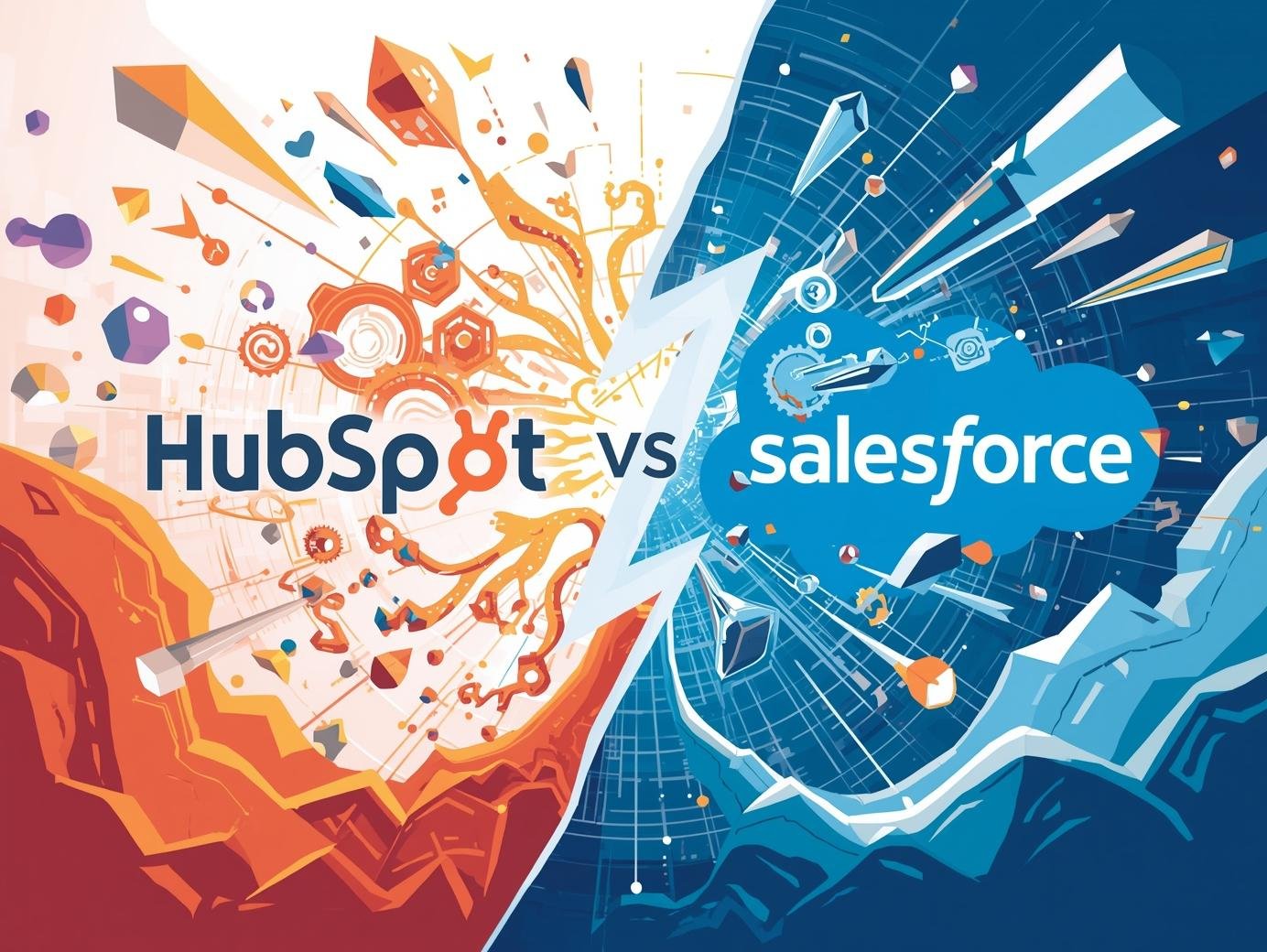
Choosing the right CRM (Customer Relationship Management) platform can define your company’s growth strategy. Two names dominate the CRM world — HubSpot vs Salesforce — and this comparison will help you decide which platform truly fits your needs in 2025.
Both platforms are powerful, feature-rich, and used by thousands of organizations worldwide. However, the Salesforce vs HubSpot debate really depends on your business priorities: simplicity, scalability, or advanced customization.
Let’s explore their key differences, pricing, and features to help you make the right decision.
Table of Contents
Overview – A Quick HubSpot vs Salesforce Comparison
| Feature | HubSpot | Salesforce |
| Founded | 2006 | 1999 |
| Best For | Small-mid businesses | Mid-large enterprises |
| Pricing Model | Freemium, scalable tiers | Enterprise-level pricing |
| CRM + Marketing | Built-in | Add-on modules |
| Ease of Use | Very easy | Advanced, complex setup |
| Integrations | 1,500+ apps | 4,000+ apps |
| Automation | Strong | Industry-leading |
When analyzing HubSpot vs Salesforce, it’s clear that each CRM offers different strengths — HubSpot focuses on accessibility, while Salesforce focuses on power and depth.
Ease of Use & Interface
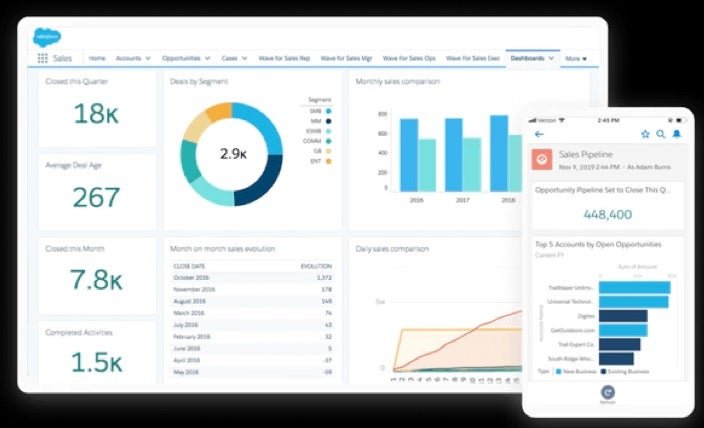
HubSpot is built for simplicity. Its dashboard is intuitive, modern, and easy to navigate — perfect for small and medium-sized businesses. You can start using the CRM immediately, even without prior experience.
Salesforce, while extremely powerful, has a steeper learning curve. Its interface is designed for enterprise users who need deep customization and advanced workflow automation. Training and setup usually take longer but pay off for larger teams.
 Verdict: HubSpot wins for ease of use; Salesforce wins for configurability.
CRM Features & Functionality
Both CRMs offer complete customer management — contacts, deals, activities, and pipelines — but their depth varies.
- HubSpot focuses on accessibility: it provides all core CRM functions out of the box, plus marketing and service features tightly integrated.
- Salesforce is modular: you can add advanced tools like CPQ (Configure, Price, Quote), AI forecasting, and complex custom fields as your business grows.
Verdict: HubSpot offers a faster start; Salesforce offers more enterprise depth.
Marketing Automation Tools
Marketing automation is where HubSpot shines. Its Marketing Hub includes:
- Email marketing and workflows
- Landing page builder
- Social media scheduling
- Blog and SEO tools
Salesforce Marketing Cloud, meanwhile, delivers enterprise-level automation with advanced segmentation and AI-powered personalization. It’s perfect for large organizations running multi-channel campaigns across regions.
Verdict: HubSpot wins for integrated marketing; Salesforce dominates enterprise automation.
 Related Reading: AI in Marketing Automation – The Ultimate Guide 2025
Sales & Pipeline Management
Salesforce was originally built for sales teams — and it shows. Its opportunity tracking, forecasting, and workflow automation are industry-leading. It also integrates deeply with Slack and other Salesforce apps for real-time collaboration.
HubSpot, while simpler, covers all essentials: deal tracking, pipeline visualization, and customizable stages. It’s ideal for smaller teams that don’t need hundreds of automation rules.
Verdict: Salesforce wins for enterprise sales management; HubSpot fits smaller, agile teams.
When comparing HubSpot vs Salesforce, you’ll notice that HubSpot favors intuitive functionality, while Salesforce excels in depth and control for complex sales operations.
Integrations & Ecosystem
- HubSpot integrates with over 1,500 apps, including Gmail, Shopify, WordPress, and Stripe.
- Salesforce AppExchange offers 4,000+ integrations — from accounting to analytics and AI.
While Salesforce has a larger ecosystem, HubSpot’s integrations are easier to connect and maintain.
Verdict: Salesforce for enterprise ecosystems; HubSpot for plug-and-play simplicity.
Reporting & Analytics
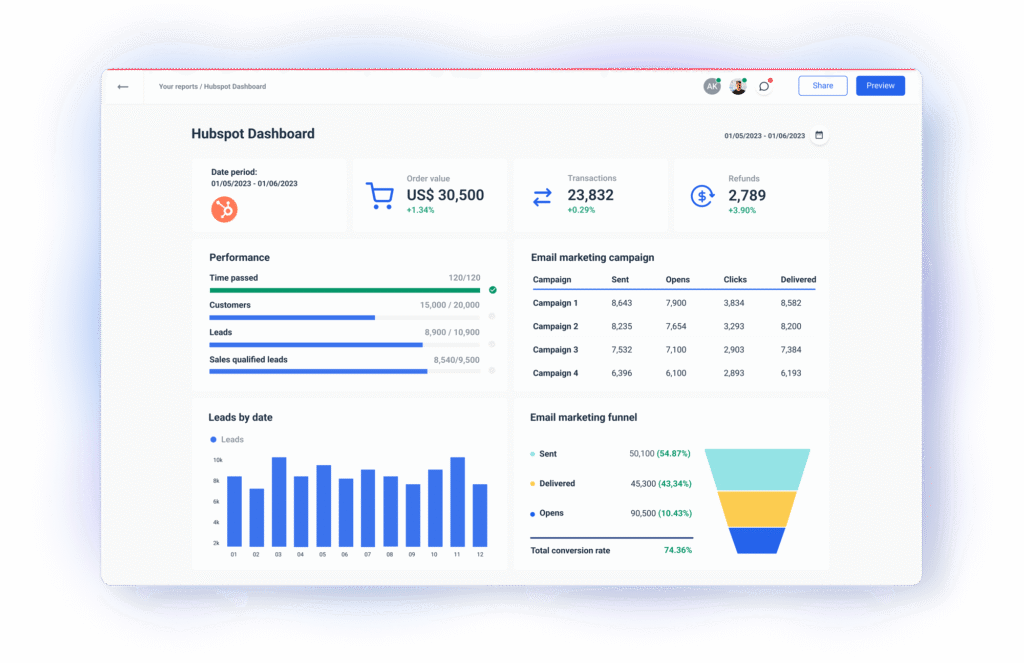
Both CRMs include reporting dashboards, but the level of customization differs.
- HubSpot offers visual, easy-to-understand reports out of the box.
- Salesforce provides fully customizable reports with AI-driven forecasting via Einstein Analytics.
Verdict: HubSpot for simplicity; Salesforce for advanced analytics.
Customer Support & Training
HubSpot provides live chat, email support, and a robust knowledge base — plus HubSpot Academy, one of the best free learning resources online.
Salesforce offers multi-channel support and professional onboarding (often through certified partners). While extensive, it’s also more expensive.
Verdict: HubSpot wins for accessible support and free learning; Salesforce for enterprise-grade programs.
Pricing & Plans (2025 Update)
| Plan | HubSpot (CRM Suite) | Salesforce (Sales + Marketing Cloud) |
| Free Tier | Yes | ❌ No |
| Starter | $30/month | $25/month (Sales Cloud only) |
| Professional | $1,600/month (5 users) | $1,800+/month (5 users) |
| Enterprise | Custom | Custom |
HubSpot follows a freemium model — start free and scale affordably.
Salesforce pricing starts higher but provides enterprise-level depth and flexibility.
Verdict: HubSpot wins for affordability; Salesforce for enterprise scalability.
Pros & Cons Comparison
| Feature | HubSpot | Salesforce |
| Ease of Use | Simple & beginner-friendly | Steep learning curve |
| Automation | Great for SMBs | Enterprise-grade |
| Pricing | Affordable plans | Premium-only |
| Customization | Moderate | Extensive |
| Analytics | Simple & visual | Deep & AI-driven |
| Integrations | 1,500+ | 4,000+ |
Below is a detailed HubSpot vs Salesforce feature comparison showing how both CRMs perform in key areas like automation, reporting, and pricing.
Which One Is Right for You?
- Choose HubSpot if you’re a small or mid-sized business that values ease of use, affordable pricing, and built-in marketing tools.
- Choose Salesforce if you need a scalable CRM with advanced automation, deep customization, and enterprise-level support.
Related Comparison: ActiveCampaign vs HubSpot – Which CRM Works Better?
Final Verdict – HubSpot vs Salesforce
The HubSpot vs Salesforce debate has no single winner — both are world-class CRM systems designed for different business sizes.
- For startups and SMBs: HubSpot offers simplicity and fast setup.
 For enterprises: Salesforce delivers unmatched scalability and customization.
No matter which platform you choose, HubSpot vs Salesforce both deliver the automation, analytics, and integrations you need to drive growth in 2025.